Vehicle Applications / Toyota Alphard — Black Captain’s Chairs
Toyota Alphard Seat Upgrade: Make the Second Row the Focus
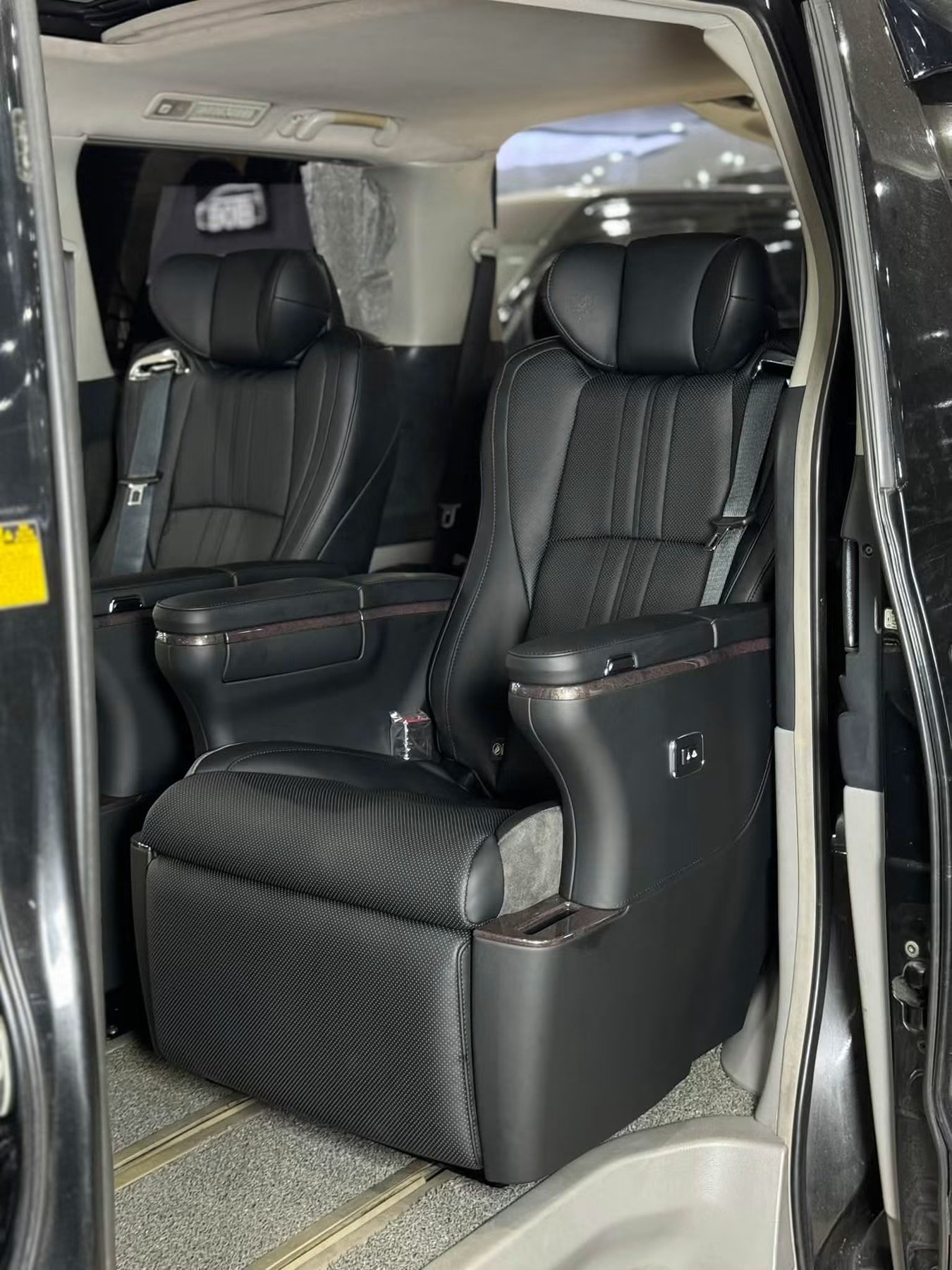
For an Alphard interior upgrade, the second row is a natural place to focus. It is where an executive guest settles after a flight, a private client spends the journey between appointments, or a family passenger takes a break during a longer trip.
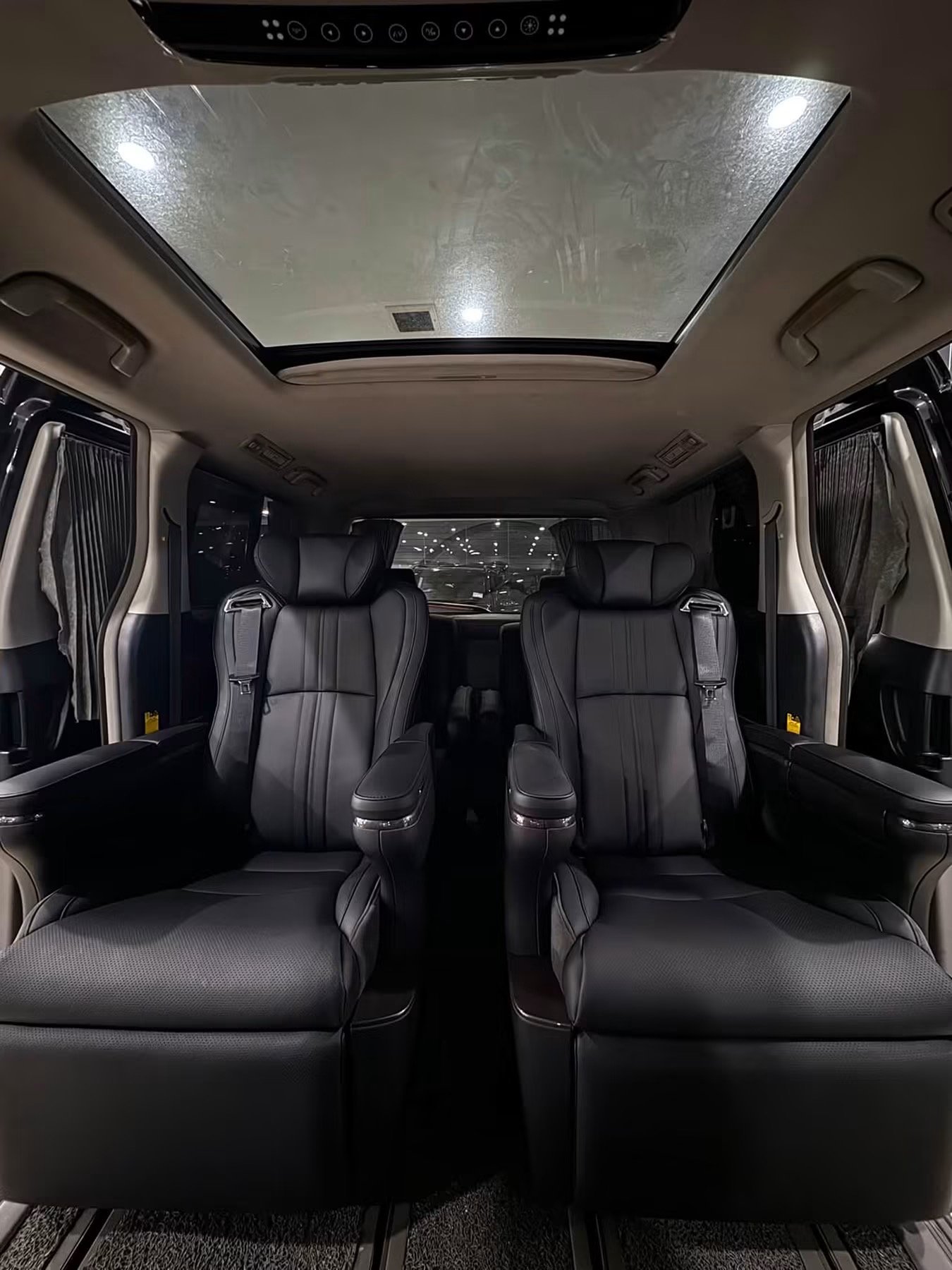
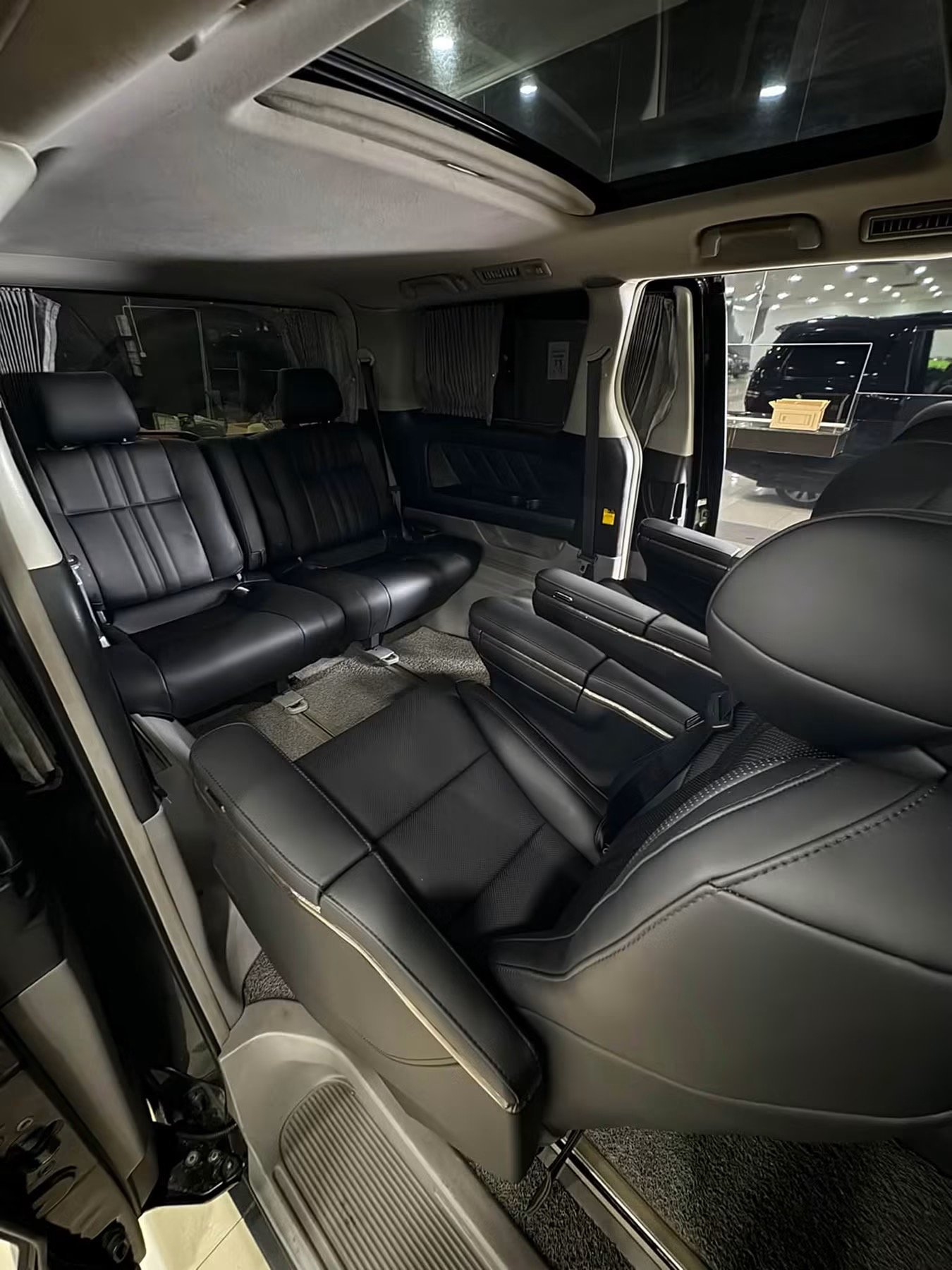
This photographic reference shows a pair of substantial black captain’s chairs installed within an existing Toyota Alphard cabin. The approach concentrates on the passenger’s immediate surroundings: the backrest, headrest, armrests, leg support, and controls within reach.
Two Chairs That Define the Passenger Experience
The featured seats have sculpted backrests, winged headrests, and broad individual armrests. Textured center panels contrast with smoother outer upholstery, while narrow decorative trim adds detail along the armrest housings.
Black seating continues through the front and rear of the photographed vehicle, giving the upgraded second row a visual connection with the rest of the cabin.
For an interior workshop or conversion business, this provides a useful design direction: make the new chairs the focal point while coordinating their finish with the vehicle’s existing seats and trim.
From an Upright Position to an Extended Resting Position
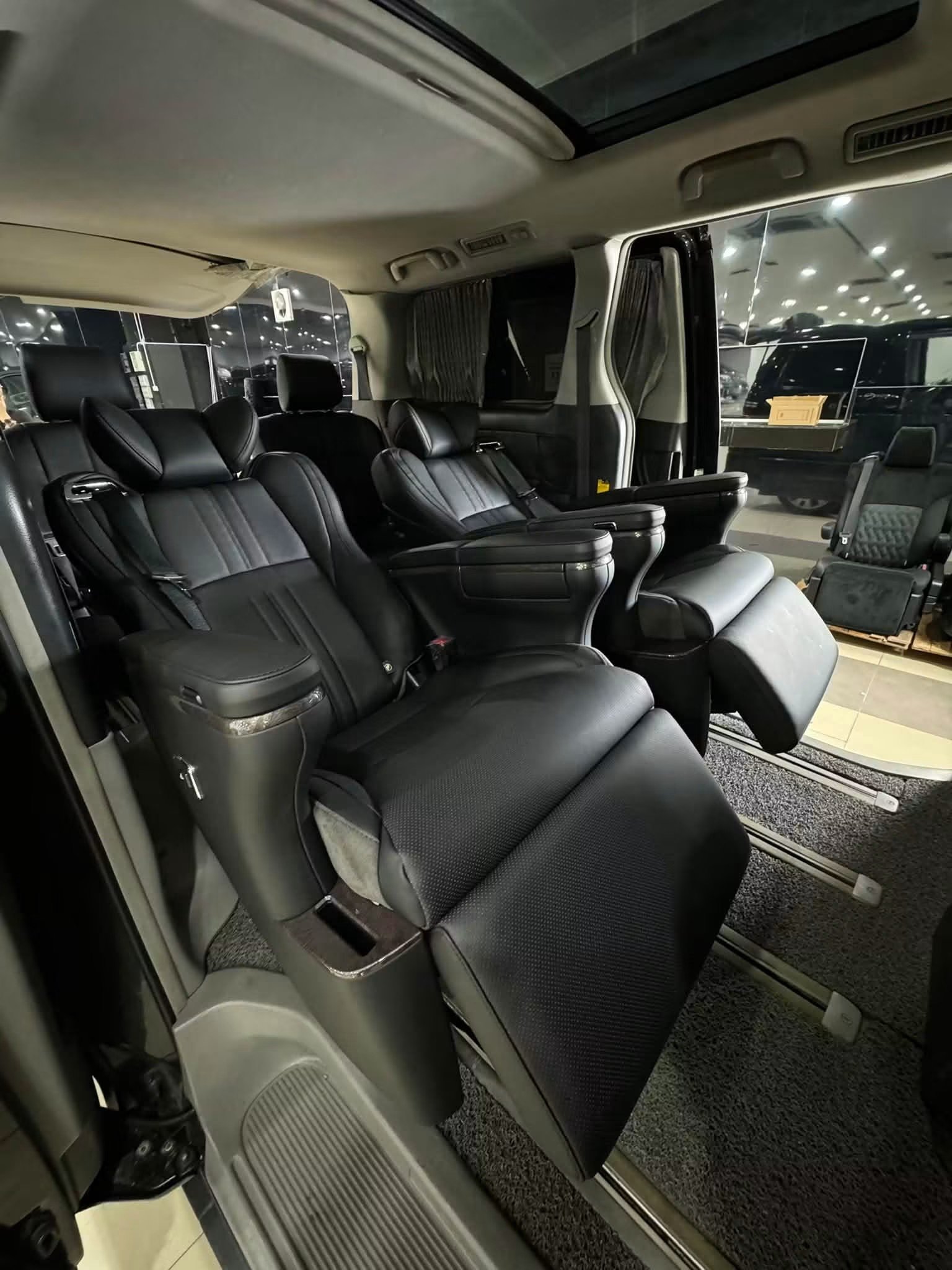
The photographs show the captain’s chairs upright and with their backrests reclined and leg supports extended. These views help illustrate the space a seat needs beyond its normal sitting position.
For customers who value a place to rest while parked, the combination of backrest recline and leg support is worth evaluating through an actual demonstration.
When planning a similar installation, assess the full movement of the seat. Check the distance to the front seats, clearance around the extended leg support, and the space left for access to the rear row. Comfort functions deliver their value when the surrounding cabin allows them to be used properly.
Adjustment Controls Within the Armrest
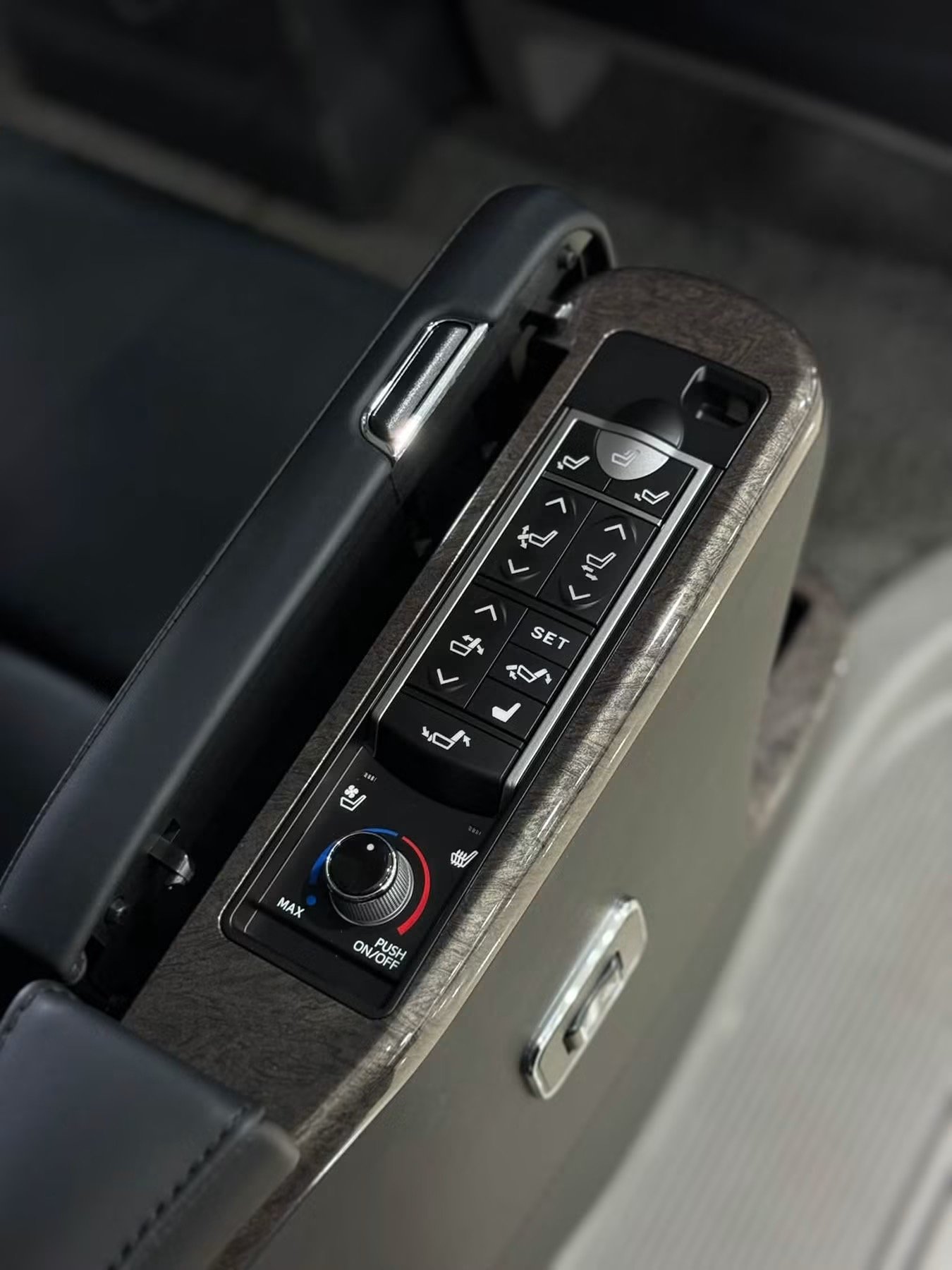
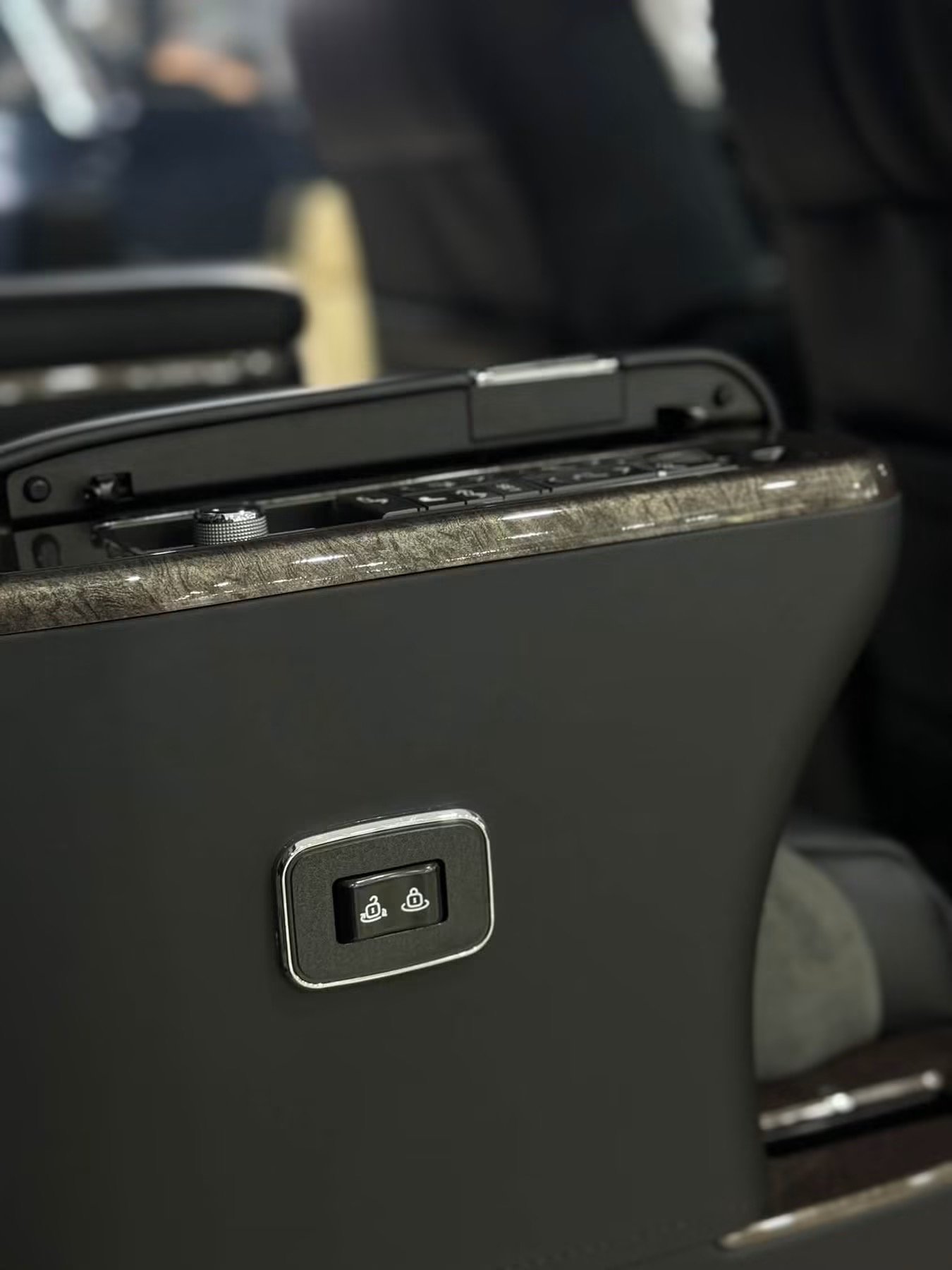
A close-up photograph shows a control panel beneath an opening armrest cover. Seat-position symbols are grouped together, with a separate rotary control marked for heating and ventilation.
This arrangement makes the control area part of the chair’s design rather than a separate cabin fitting.
For procurement, request the function list for the exact seat being quoted. Confirm which adjustments are powered, how each control operates, and whether heating, ventilation, or other functions are included in the selected configuration.
The panel provides a visual reference; the final specification should be agreed for your order.
Fit the Upgrade to the Existing Alphard
The installation photographs show the relationship between the chairs, floor rails, side-door opening, and rear seating. These are important starting points for an Alphard upgrade proposal.
Before selecting a seat, provide the vehicle’s model year, chassis code, current seating arrangement, and photographs of the floor mounting area. Your installer should review the proposed seat height, mounting arrangement, electrical connections, and restraint requirements.
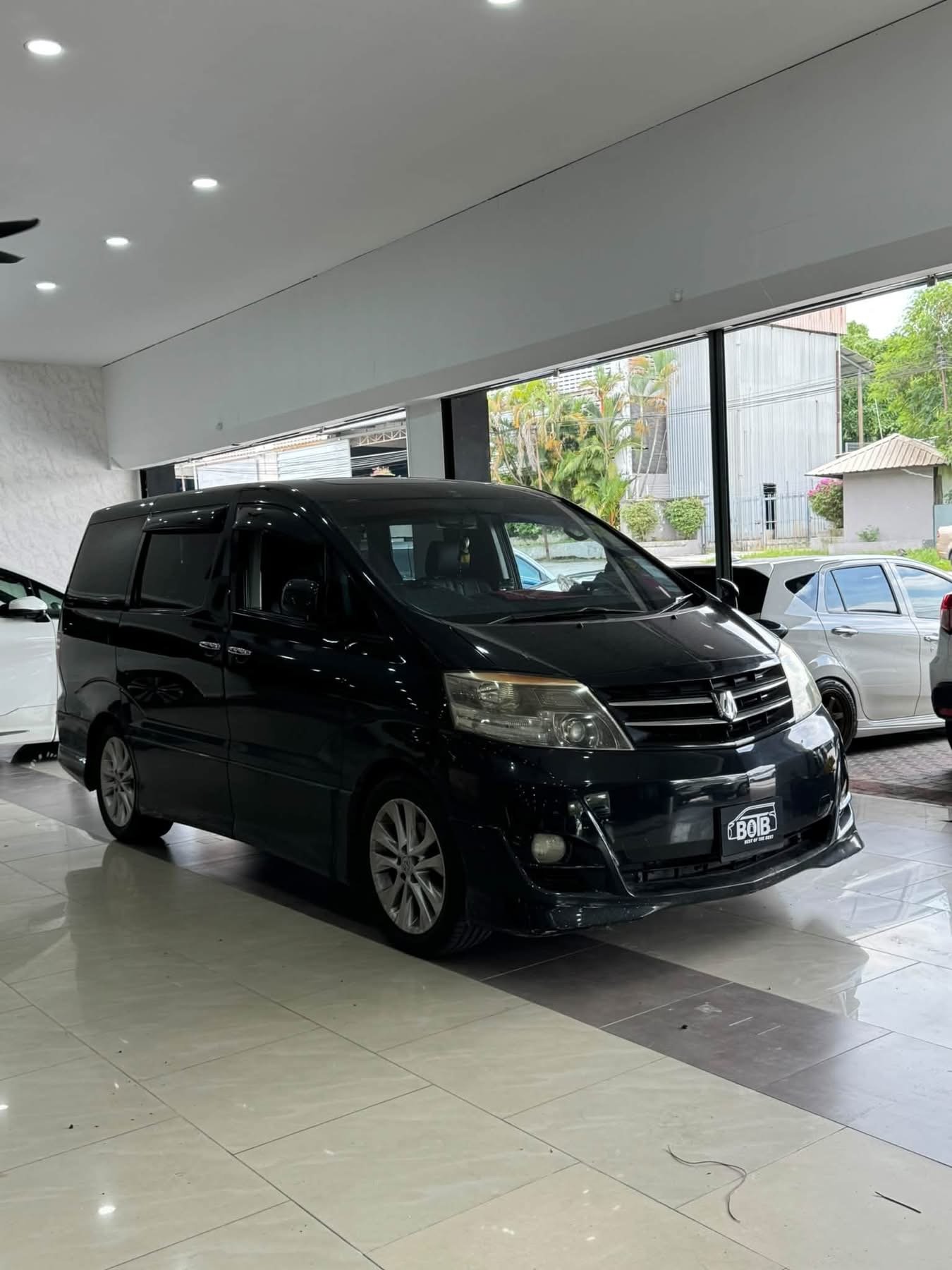
An Alphard application reference does not establish fitment across every generation or trim level. A useful quotation should identify the seat specification and the installation work relevant to your vehicle.
Build a Clear Brief for Your Seat Supplier
For a single demonstration vehicle or a series of customer conversions, begin with the details that affect selection:
- Alphard model year, chassis code, and installation country
- Number of seats required and expected order quantity
- Photographs of the existing second row and mounting area
- Preferred upholstery, trim, and adjustment functions
- Whether access to the rear row must be retained
Share the photograph from this reference that best represents your intended result.
Visit liuyuseats.com to discuss second-row passenger-seat options and request a quotation for your Toyota Alphard upgrade.
Contact Us
LIUYU SEATS
Huangshi, Hubei, China
WeChat: 17762965508
Send a Message
Interested in our seats? Tell us what you need and leave your contact details.
Explore Our Seats
© 2026 Liuyu Seats. All rights reserved.