Vehicle Applications / Toyota Hiace 9-Seat Conversion
2026 Toyota Hiace 9-Seat Conversion: An Upgrade in Passenger Comfort
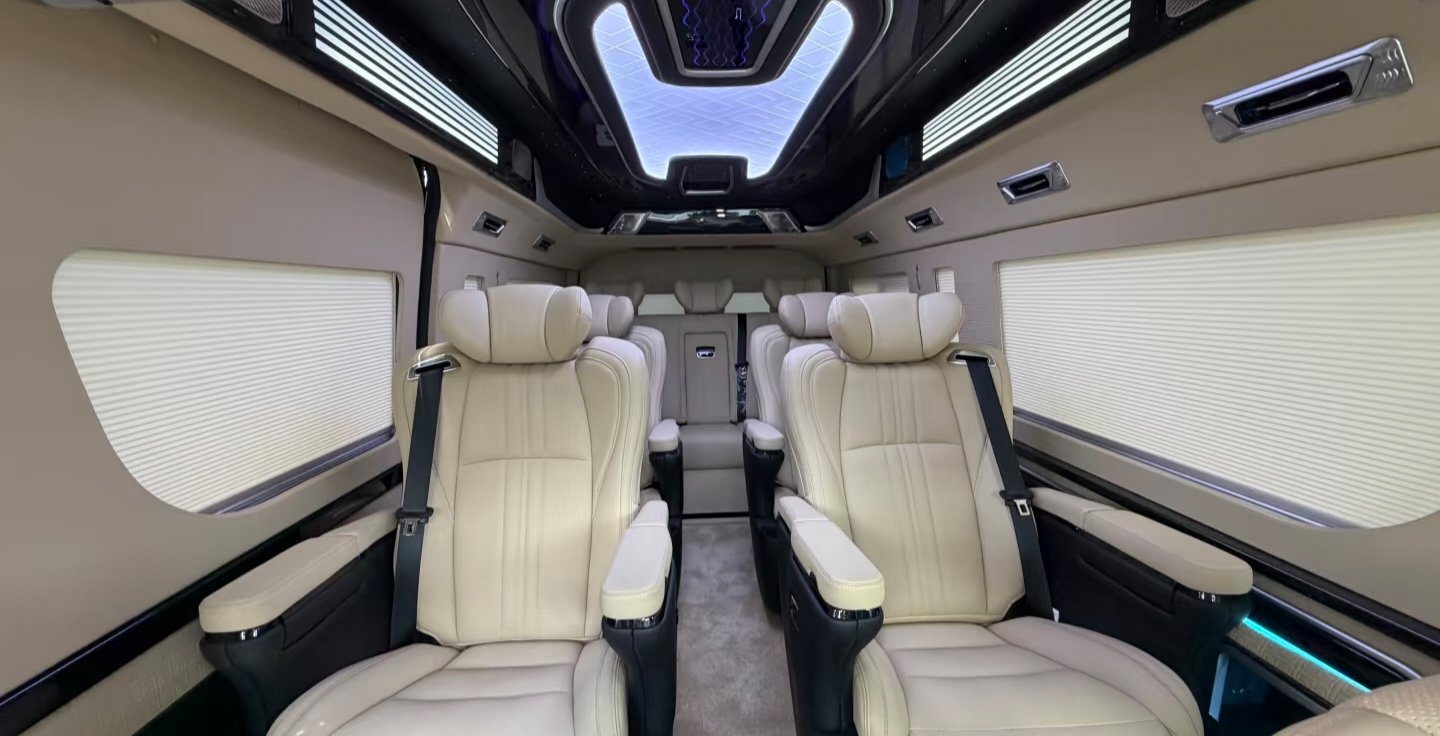
Interior design reference. Specific seat models and equipment should be selected for your vehicle.
A welcoming passenger cabin makes an impression from the moment the sliding door opens. This Toyota Hiace interior combines beige seating, upholstered panels, and decorative ceiling lighting to create a coordinated space for business and private travel.
The nine-seat configuration brings individual passenger seats and a rear bench together in one layout, offering inspiration for transport operators, vehicle converters, and owners planning an interior upgrade.
A 2+2+2+3 Layout for Individual Comfort and Group Travel
This configuration includes two front seats, two middle rows with two individual seats each, and a three-seat rear bench—nine seats in total, including the driver.
The individual captain’s chairs in the middle rows provide each passenger with a headrest and armrests. A central aisle connects these rows, while the rear bench completes the seating arrangement and continues the cabin’s coordinated design.
For your project, plan seat spacing around passenger access, seat adjustment clearance, and luggage requirements. These details determine how practical the layout will be in everyday use.
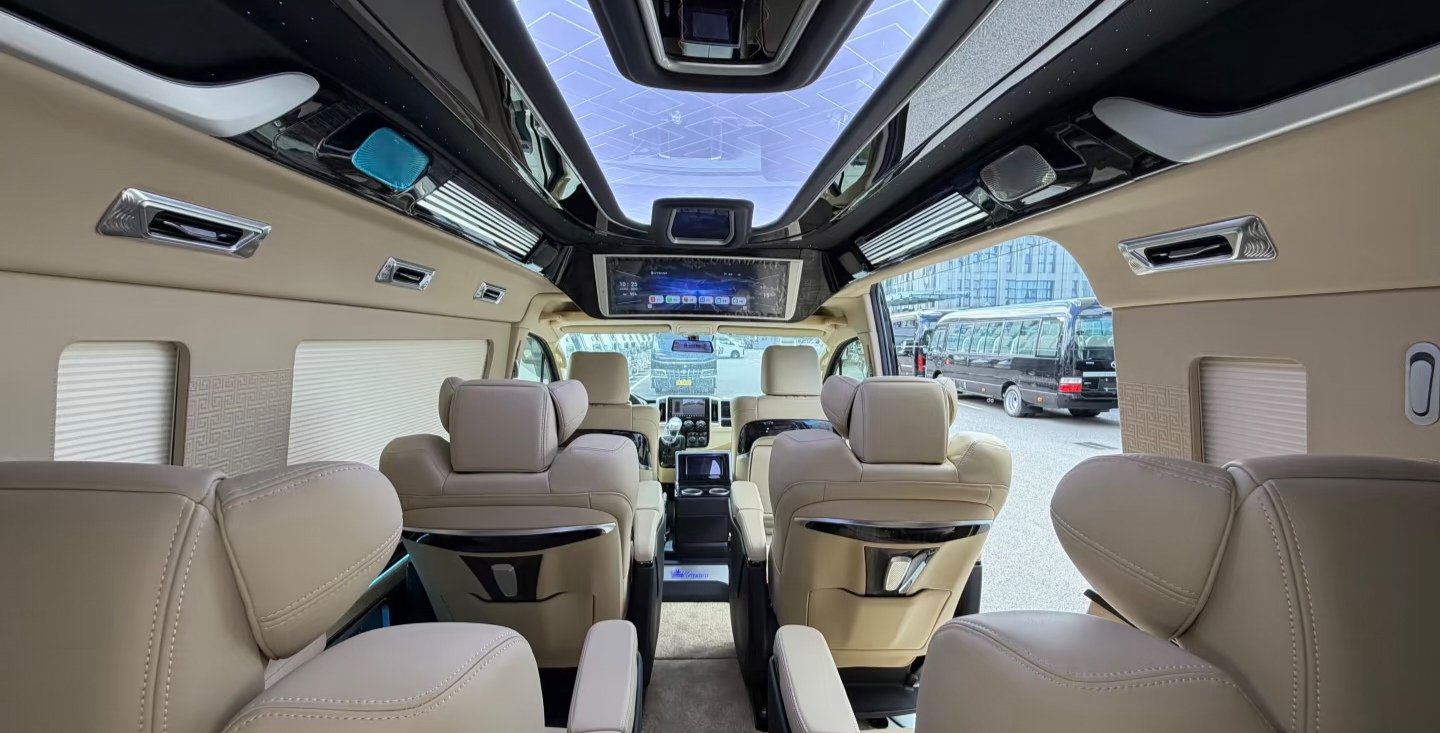
Toyota Hiace seating rows and central aisle reference.
A Coordinated Interior, From Seats to Ceiling
Beige upholstery contrasts with dark seat shells and glossy trim, creating a consistent visual style. The window blinds, side-panel ambient lighting, and decorative starlight headliner shown in the photographs add further depth to the interior.
The seats play an important role in the overall design. Their colors, stitching, and upholstery textures can guide the choice of surrounding trim, helping the passenger area feel cohesive.
When discussing your seating project, share photographs of the existing interior or reference images of the look you want to achieve. These make it easier to compare suitable colors and materials.
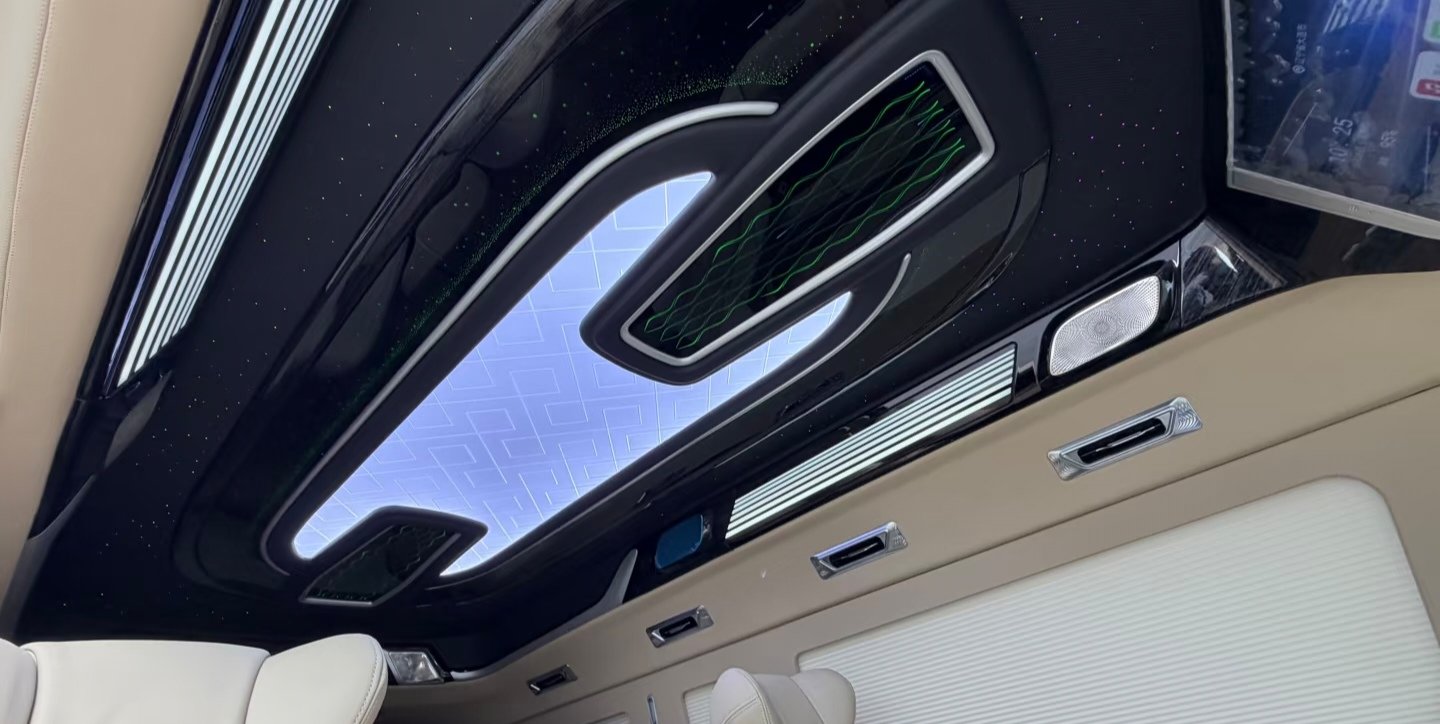
Decorative ceiling lighting and starlight headliner reference.
Face-to-Face Seating and a Rear Rest Area
The photographs also show passenger seats facing each other around a central table. This arrangement provides inspiration for a space where passengers can sit together and talk while the vehicle is parked.
The rear bench is shown in a flattened position, illustrating another way to use the cabin during a stop.
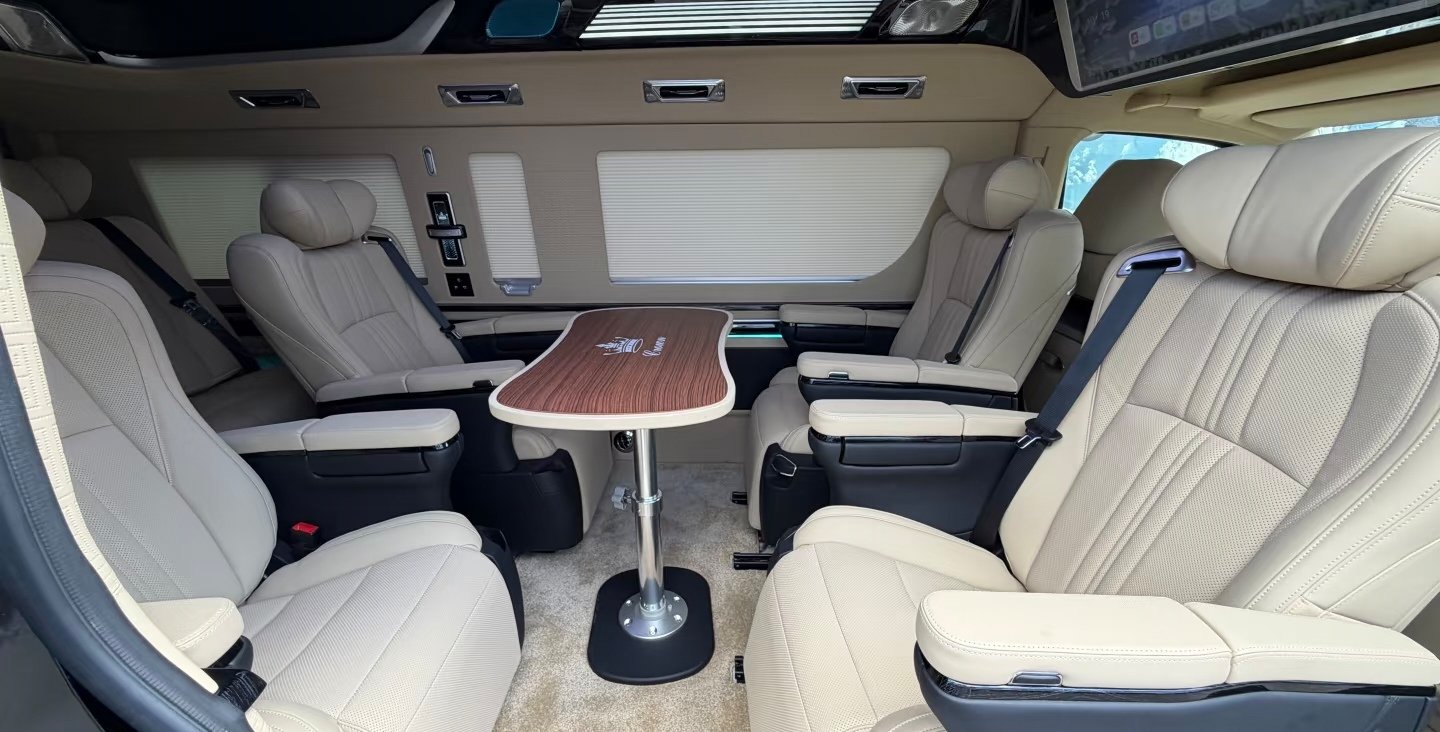
Face-to-face seating reference for use while parked.
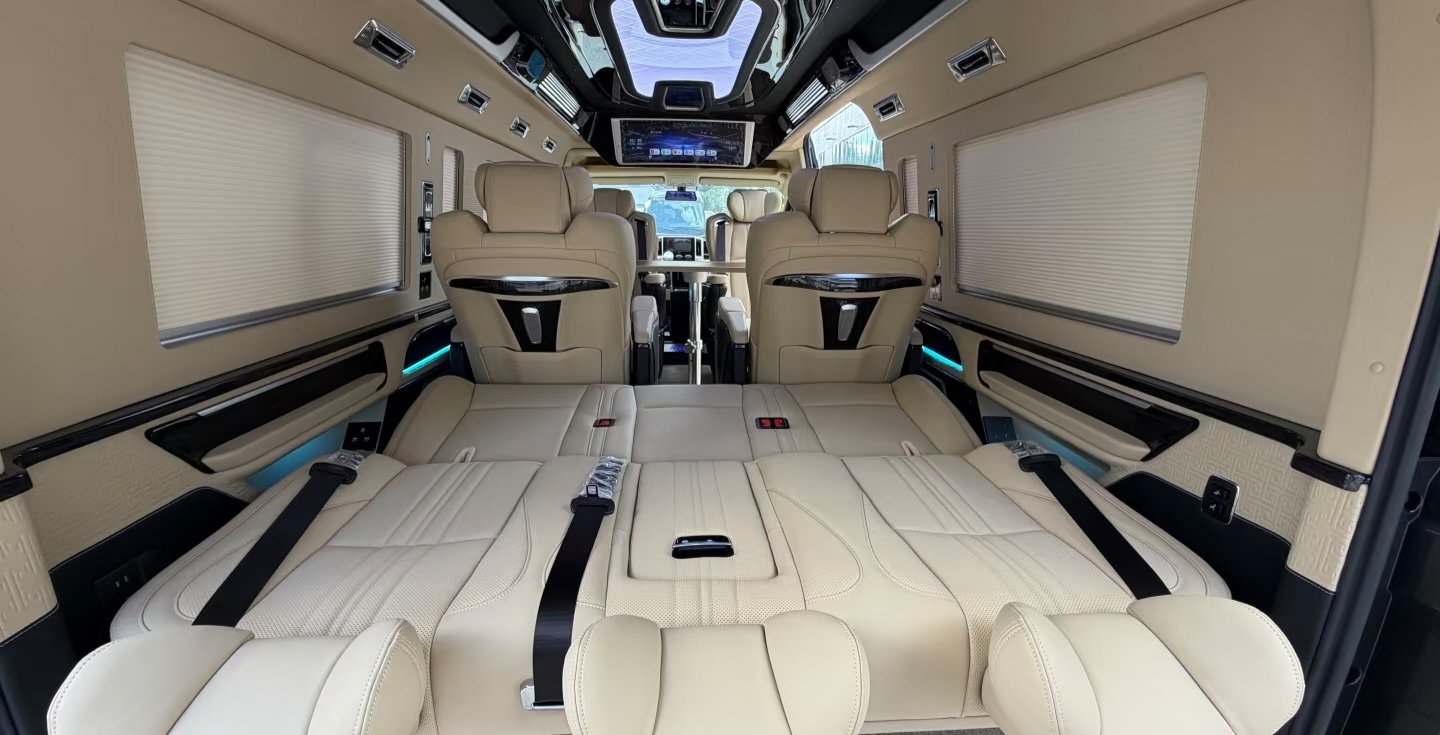
Rear bench flattened during a stop — interior reference.
If you are considering these arrangements, confirm the required seat mechanisms, table clearance, and operating positions with your supplier and installer. Seating positions and restraint requirements for travel should be determined as part of the complete vehicle plan.
Choose Seats Around How You Use Your Hiace
Different services call for different seating and layout priorities.
- Executive transfers: Coordinated upholstery, convenient seat controls, and a tidy passenger environment.
- Family and private travel: Individual seating space, practical upholstery materials, and room for luggage.
- Team transport: Easy entry and exit, efficient cleaning, and a layout suited to frequent daily use.
Visit liuyuseats.com to discuss passenger-seat options, upholstery preferences, and adjustment requirements for your conversion project. Before finalizing the layout, confirm the selected model’s dimensions, available functions, and installation requirements.
The photographs provide an interior design reference. Specific seat models and equipment should be selected for your vehicle.
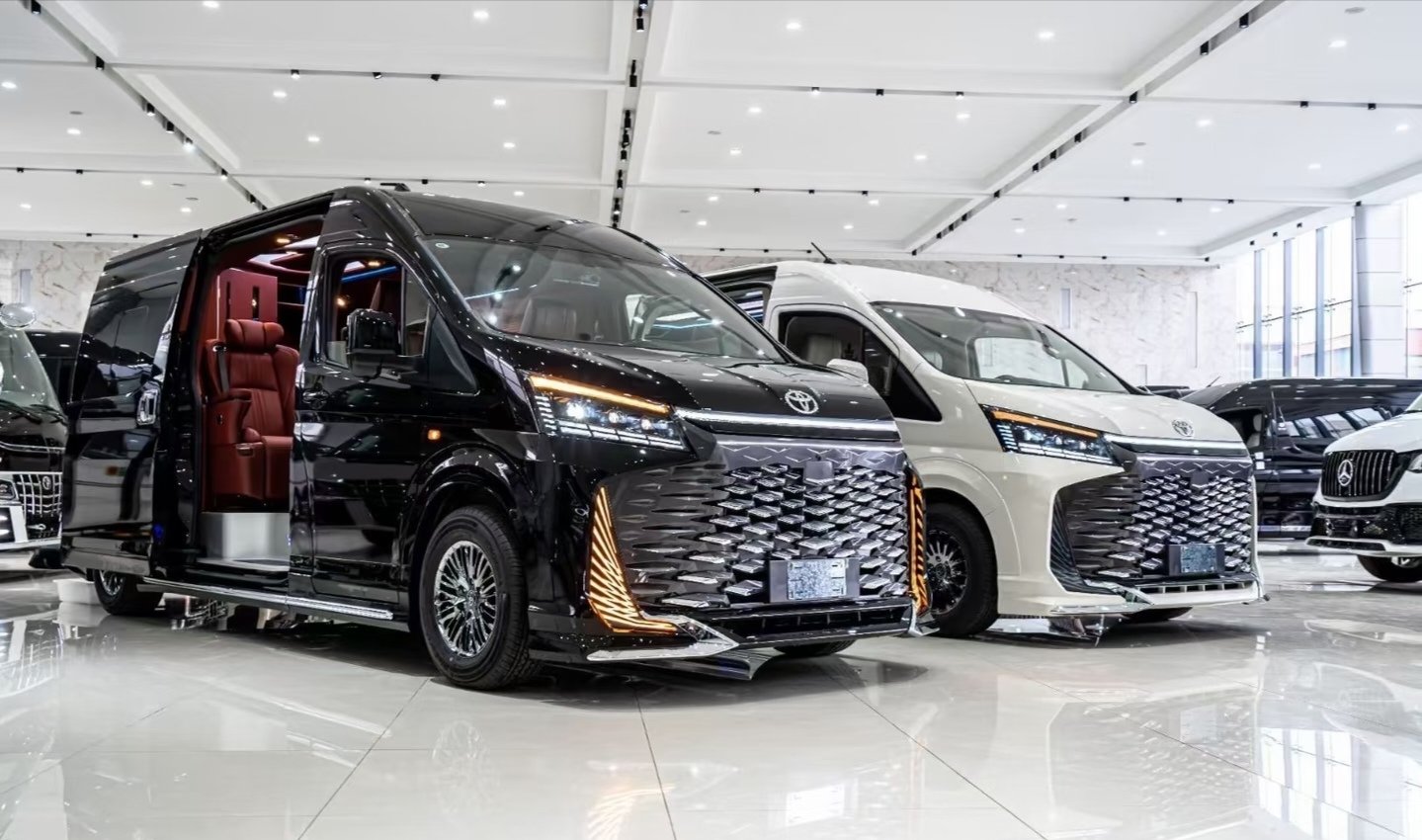
Toyota Hiace exterior design reference.
Discuss Your Toyota Hiace Seating Project
Start by sharing your vehicle’s model year, body version, interior dimensions, and desired seating capacity. Include interior photographs or a floor plan, your preferred seat functions and colors, the installation country, and the estimated seat quantity.
These details help turn visual inspiration into specific seating requirements.
Visit liuyuseats.com to explore seating options and request a quotation for your Toyota Hiace project.
Contact Us
LIUYU SEATS
Huangshi, Hubei, China
WeChat: 17762965508
Send a Message
Interested in our seats? Tell us what you need and leave your contact details.
Explore Our Seats
© 2026 Liuyu Seats. All rights reserved.